
Step-In vs Adjustable Harnesses: Which Fit Suits Your Dog?
Choosing the right harness can make every walk smoother and safer. Two of the most common types you’ll come across are the step-in harness and the adjustable harness. Understanding the differences in a step-in vs adjustable harness comparison will help you choose the style that best supports your dog’s comfort and safety.
This guide will help you explore the pros and cons, measure your dog correctly, and decide which fit will work best for your walks.
Bookmarks:
Why harness choice matters?
Harnesses help reduce strain on your dog’s neck, spread pressure evenly across the chest, and give you better control. But not all harnesses are created equal. Picking the wrong style can make your dog uncomfortable or even encourage pulling.
If you’re trying to decide between a step-in harness and an adjustable harness, it helps to know exactly how each works and the benefits they bring.

What is a step-in harness?
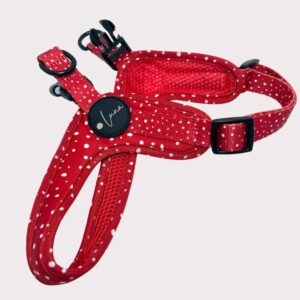
A step-in harness is designed so your dog steps into the harness with both front legs. The harness is then clipped together at the back.
- Ease of use: Quick to put on, especially for dogs who don’t like harnesses pulled over their head.
- Best for: Small to medium breeds, nervous dogs, and pups who fidget.
- Example: See our step-in-harnesses
What is an adjustable harness?
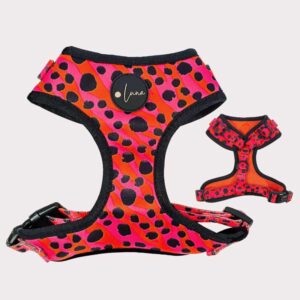
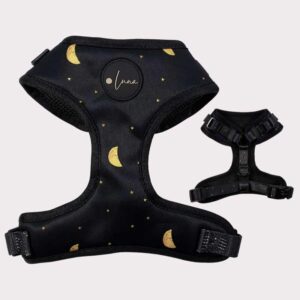
An adjustable harness has multiple straps that can be tightened or loosened to achieve the perfect fit. Most slip over the dog’s head and then secure around the chest and belly.
- Flexibility: Suits a wide range of body shapes.
- Growth-friendly: Ideal for puppies still filling out or dogs that fluctuate in weight.
- Control: Often gives a snugger fit, which helps with handling energetic dogs.
- Example: See our adjustable dog harnesses
Comparison table
An adjustable harness has multiple straps that can be tightened or loosened to achieve the perfect fit. Most slip over the dog’s head and then secure around the chest and belly.
- Flexibility: Suits a wide range of body shapes.
- Growth-friendly: Ideal for puppies still filling out or dogs that fluctuate in weight.
- Control: Often gives a snugger fit, which helps with handling energetic dogs.
Step-In vs Adjustable Harness Comparison
|
Feature
|
Step-In-Harness
|
Adjustable Harness
|
|---|---|---|
|
Ease of use
|
Very quick to put on
|
Slightly more involved
|
|
Best suited for
|
Small to medium breeds, nervous dogs
|
Medium to large breeds, strong pullers
|
|
Adjustability
|
Limited
|
High
|
|
Escape risk
|
Low if well fitted
|
Very low when adjusted correctly
|
|
Puppy suitability
|
Good for very young pups
|
Better for growth stages
|
Pros and cons of each
Step-in harness advantages
- Quick and simple to use.
- Gentle on the neck.
- Low chance of rubbing if fitted correctly.
Step-in harness disadvantages
- Limited adjustability, so not always a perfect fit.
- Some dogs wriggle when you try to place their paws through the openings.
Adjustable harness advantages
- Fully customisable fit.
- Often more secure, reducing escape risk.
- Works well with no-pull setups for strong dogs.
Adjustable harness disadvantages
- Can be trickier to put on.
- Extra straps may feel bulky on very small breeds.
Which harness suits which dog?
Different breeds and personalities benefit from different designs.
- Small breeds (e.g. Chihuahuas, Dachshunds): Step-in harnesses avoid pressure on delicate necks.
- Medium breeds (e.g. Cocker Spaniels, French Bulldogs): Either style works, depending on temperament.
- Large breeds (e.g. Labradors, German Shepherds): Adjustable harnesses provide strength and security.
- Nervous dogs: Step-in styles avoid the stress of pulling a harness over the head.
- Energetic pullers: Adjustable styles paired with a rope lead or no-pull setup provide more control.
Common mistakes to avoid
Even with the right harness type, mistakes can cause discomfort or risk escape. Watch out for:
- Wrong sizing: Always measure before buying.
- Too loose: Dogs can back out of a loose harness.
- Too tight: Restricts breathing and causes chafing.
- Incorrect placement: Straps should sit flat and not twist.
How to measure your dog for the right fit
Fit matters more than style. A poorly fitted harness can rub, restrict movement, or even allow escape.
- Measure around the chest (widest part behind the front legs).
- Measure around the neck (where a collar would sit).
- Compare against size guides for the harness you’re considering.
Tip: If your dog falls between sizes, choose the larger size and use adjustable straps where possible. See our guide on how to measure your dog for a harness.
Other kit to pair with your harness
Harnesses are only part of your walkies setup. Consider adding:
- Leads: Shorter for pavement walks, longer for park roaming. Read our guide on lead lengths.
- Reflective gear: Especially useful for early mornings and winter evenings.
- Collars: Still handy for ID tags, even if your dog mainly uses a harness.
Final thoughts: making walks easier
Both step-in and adjustable harnesses can make daily walks safer and more enjoyable. The right choice depends on your dog’s size, shape, and personality. Focus on comfort, security, and ease of use. When fitted properly, either type can help you and your dog enjoy walkies with confidence.
FAQs
What is better, a step-in or adjustable harness?
Neither is universally better. Step-in harnesses suit smaller or nervous dogs, while adjustable harnesses are best for strong or growing dogs.
Can puppies wear step-in harnesses?
Yes, puppies can wear step-in harnesses. Since ours are adjustable at the chest, they can be made snug as your pup grows. For fast-growing puppies, though, a fully adjustable harness may be the more practical option.
How do I know if my dog’s harness fits correctly?
It should be snug but not tight. You should be able to slip two fingers between the harness and your dog’s body.
Do I still need a collar if my dog wears a harness?
Dogs in the UK must legally wear an ID tag when out in public. The tag can be attached to either a collar or a harness, but many owners prefer collars as an easy way to carry ID.
-
-
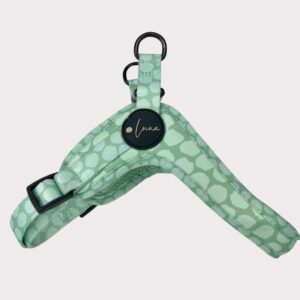
Step-in Dog Harness | Green Polka Dot Design
£15.50 – £20.00Price range: £15.50 through £20.00 -
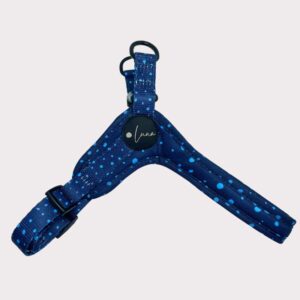
Step-in Dog Harness | Blue Polka Dot Design
£13.00 – £20.00Price range: £13.00 through £20.00 -
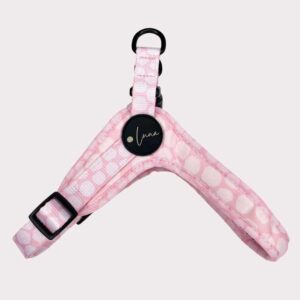
Step-in Dog Harness | Pink Polka Dot Design
£15.50 – £20.00Price range: £15.50 through £20.00 -

-
-
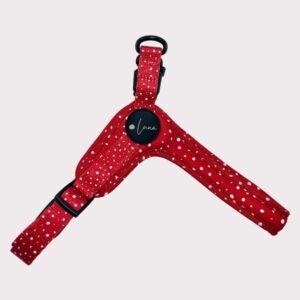
Step-in Dog Harness | Red Polka Dot Design
£13.00 – £20.00Price range: £13.00 through £20.00 -
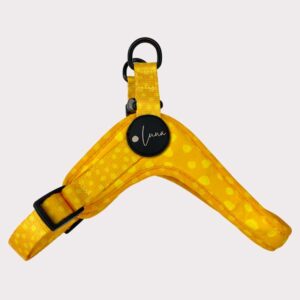
Step-in Dog Harness | Yellow Polka Dot Design
£15.50 – £20.00Price range: £15.50 through £20.00
The Luna Collection
Dog Acessories
Share This Post
LinkedIn
Threads
Pinterest
Twitter
Facebook