
How to Put a Harness on a Dog

Knowing how to put a harness on a dog is more than just a practical skill – it’s the first step to safer, more comfortable walkies. Many dog parents choose a harness over a collar because it offers better control, especially for dogs who pull or have delicate necks.
Harnesses are also a gentler choice for breeds prone to respiratory issues, like Bulldogs and Pugs with BOAS (brachycephalic obstructive airway syndrome), or small dogs like Cavaliers who may be affected by syringomyelia (SM). Our Daisy is a Cavalier, and while she’s thankfully clear of SM, she always wears a harness to protect her neck. Dexter wears one too – he’s a lightning bolt on walkies and tends to pull in all the excitement. For them, harnesses mean comfort, safety and just the right amount of flair.
The Two Main Types of Dog Harnesses
When learning how to put a harness on a dog, it helps to understand the two main types: step-in and over-the-head. Each works a little differently, and the best choice depends on your dog’s needs and preferences.
Step-In Harnesses
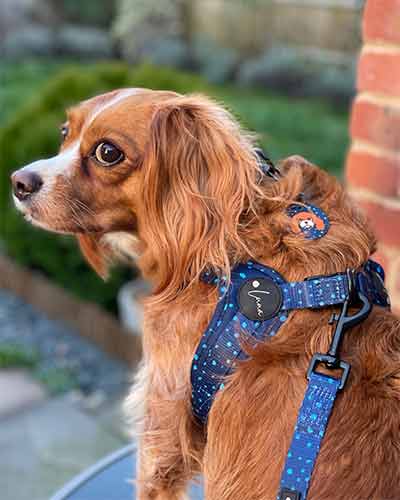
Step-in harnesses are designed so your dog can place their front paws directly into the harness while it’s laid flat on the ground. You then lift it up and clip it at the back. There’s nothing that goes over the head, which can be a big relief for nervous or rescue dogs.
Our Lucy, who was very anxious when she first joined our family, found step-in styles far more comforting. She didn’t like anything being pulled over her head, so this design made all the difference.
We even have a short video featuring one of our lovely brand reps to show how easy it is.
Over-the-Head Harnesses
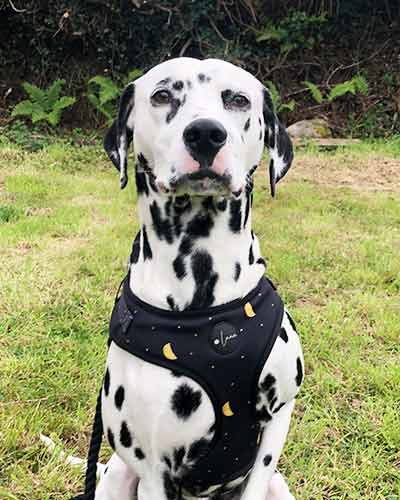
This style slips gently over your dog’s head before being clipped underneath the chest. Many dogs don’t mind this at all, especially if they’ve worn harnesses since puppyhood.
The adjustable fit can be handy for dogs with thick coats or unique body shapes. Our Dexter wears this type too – once he’s calmed down from the excitement of setting off, it gives him a snug and secure fit.
How to Put On a Step-In Dog Harness
Here’s a simple step-by-step guide for how to put a step-in harness on a dog using our adjustable neoprene step-in harnesses. They’re ideal for dogs who prefer not to have anything pulled over their head.
Step-by-Step Instructions
- Lay the harness flat on the floor with the logo facing down.
- Guide your dog’s front paws into the two openings.
- Pull the harness up and clip it on top of their back.
- Adjust the chest strap for a snug but comfy fit – you should be able to fit two fingers underneath.
- Tip: Give them a treat or two if they’re feeling unsure or wriggly.
How to Put On an Over-the-Head Dog Harness
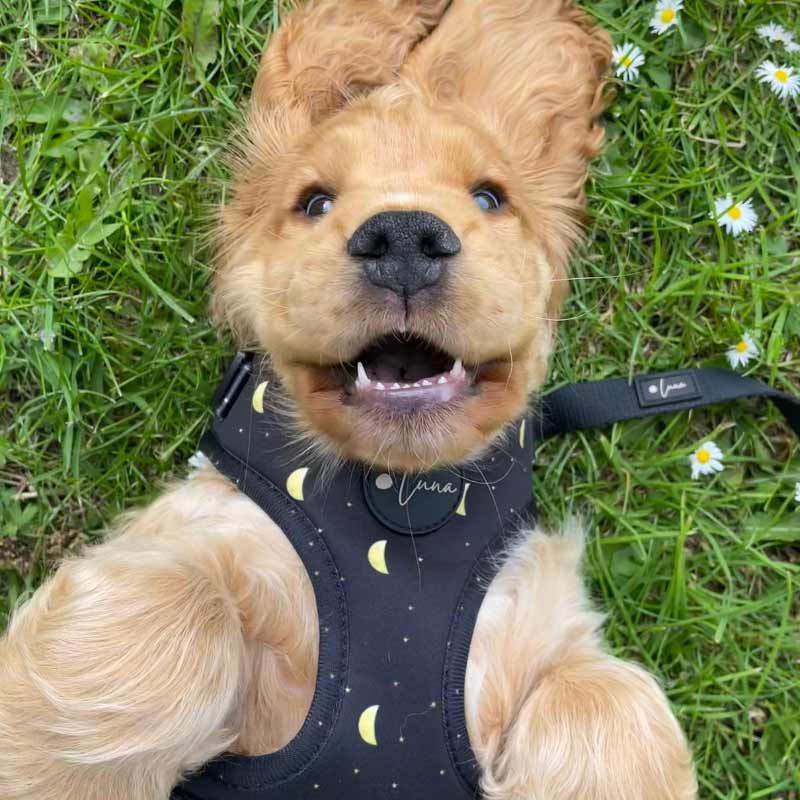
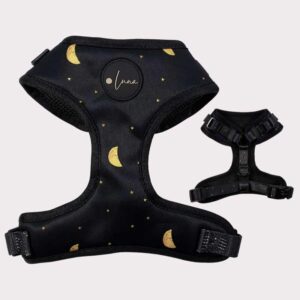
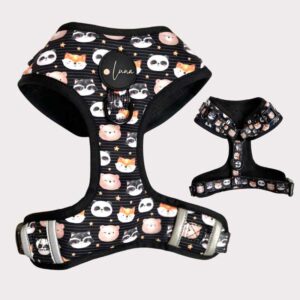
Our adjustable harnesses are a classic over-the-head style, offering a soft, secure fit that’s easy to wear and adjust.
Step-by-Step Instructions
- Gently slip the neck section over your dog’s head.
- Reach underneath their chest and bring the strap around to clip it on the side.
- Adjust the two straps on either side of the neck, plus the chest strap – that gives you three adjustment points for a snug but not too tight fit.
- Make sure the harness sits flat against their body – no pinching or twisting.
- Use the two-finger rule: if you can fit two fingers under the straps, it’s just right.
- Keep an eye out for any rubbing, especially behind the front legs.
This style is great for dogs who don’t mind a bit of over-the-head handling, and it’s especially handy if your dog is a slightly unique shape – the adjustable straps help you get that perfect fit.
Other Types of Dog Harnesses
When learning how to put a harness on a dog, it helps to understand the different styles available. Each one suits different walking styles and training needs.
Front-Clip Harnesses
These harnesses have a lead attachment point at the chest. They’re often used by trainers to help manage pulling, as the front connection gently turns your dog back towards you when they surge ahead. They can take a bit of getting used to but are popular for strong or enthusiastic walkers.
Back-Clip Harnesses
These harnesses have a lead attachment on the back, typically between the shoulders. They’re easy to use and feel natural for many dogs. Some styles offer adjustable chest straps, while others are fixed in size.
You’ll also find versions with a built-in handle — especially helpful for larger dogs. It lets you guide them easily without bending down, offering quick control in busy areas or when helping your dog into the car.
Our adjustable harnesses use a back-clip style for a secure, streamlined fit.
Dual-Clip Harnesses
These harnesses feature both front and back attachment points, giving you flexibility during walkies. You can use one lead clipped to the front to manage pulling or attach two leads for added control. They’re often used for training or with dogs who are still learning polite walking.
Our Forest Babies adjustable harness includes a front clip too, allowing you to lead from both ends if needed.
No-Pull Harnesses
No-pull harnesses are a variation of the front-clip style, with a D-ring positioned at the chest. When your dog pulls, the positioning gently redirects their movement, reducing their ability to surge ahead.
They can also tighten slightly across the chest to discourage pulling — not in a painful way, but enough to shift your dog’s focus back to you. They’re especially useful if your dog is strong, or if you’re walking with a pram or managing mobility.
Many front-clip and dual-clip harnesses are described as “no-pull” for this reason.
Vest Harnesses
This wraparound style offers soft, full-coverage comfort across the chest and back. Some fasten using hook and loop straps rather than clips — just wrap, press to secure, and go. They’re quick to put on and gentle for small or short-haired dogs.
These are best suited to toy breeds, small dogs, or puppies. If your dog tends to pull, the fastening may come loose, so they’re not ideal for strong or energetic walkers. They can also feel a bit warm for fluffy dogs or in hotter weather.
Handle Harnesses
Built with a top handle, this style gives you quick, direct control. It’s great for helping your dog over steps, into the car, or navigating busy spots. Often used for larger dogs or those needing a little extra support.
Safety Harnesses
Designed specifically for car travel, safety harnesses work by attaching securely to a seat belt rather than a collar. This is important for dogs who usually walk on a collar, as clipping a car restraint to the neck can be dangerous during a sudden stop. These harnesses help protect your dog by spreading pressure safely across the body.
If your dog already wears a harness for walkies, like our adjustable or step-in harnesses, you’re likely good to go. Ours are designed to be soft, secure, and ideal for clipping into a seat belt attachment.
Planning a road trip? You’ll find more tips on safe travels in our blog: Dog on Holiday: The Complete Guide to Travelling with Your Dog.
How Do You Know Your Dog’s Harness Fits?

A well-fitted harness should feel like a second skin — secure, comfortable, and never restrictive. Here’s how to check if your dog’s harness fits just right.
The Two-Finger Rule
You should be able to slide two fingers snugly between the harness and your dog’s body — at both the neck and chest. Too tight, and it may rub. Too loose, and they might wriggle free.
No Rubbing or Red Marks
After walkies, check your dog’s coat and skin. Look out for any signs of rubbing, especially around the armpits, shoulders, or under the chest. A well-fitted harness shouldn’t leave marks.
Smooth, Even Straps
Straps should lie flat against the body, without twisting or bunching. If they shift around too much during movement, it may need adjusting or a different style.
Secure But Not Stiff
The harness should stay put when your dog moves, but still allow them to sit, lie down, and stretch comfortably.
Body Language Tells All
Your dog should move freely and seem at ease. If they freeze, walk oddly, or keep trying to scratch it off, the fit might be off — or they may need a different shape or style.
At The Luna Collection, we design all our harnesses with comfort in mind. Daisy, Lucy and Dexter have all road-tested our styles, and we only ever offer the ones they’d happily wear on their daily walkies.
FAQ
How to put a dog harness on correctly?
Choose the right style for your dog, follow the step-by-step fitting guide, and check the straps every time. You should be able to fit two fingers under each strap.
Is it better to walk your dog on a collar or harness?
For most dogs, a harness is the safer and more comfortable option. It avoids pressure on the neck and helps reduce pulling, especially for smaller breeds or those with respiratory issues.
How to use a front clip harness?
Attach your lead to the front D-ring at your dog’s chest. When they pull, the lead gently redirects them back towards you, helping encourage better walking habits over time.
How to put a harness on a dog for the first time?
Start slow. Let your dog sniff the harness first. Use calm tones and treats, then follow the step-by-step instructions for the style you’re using. Keep sessions short and positive.
How to put on a dog harness that has a buckle?
Place the harness on your dog, ensuring the straps are positioned correctly. Then fasten the buckle and adjust for fit. Whether step-in or over-the-head, the buckle should close securely without pinching.
How to put on a dog harness that steps through front legs?
Lay the harness flat, with the logo or D-ring side facing the floor. Guide your dog’s front legs into the openings, pull the harness up around the chest, and clip on the back.
How to put a dog harness on a small dog?
The process is the same — just go gently. Step-in harnesses are especially helpful for little dogs, and treats always help. If your pup is still growing, check the fit regularly — they’ll likely need a size up sooner than you think.
You’re Ready for Walkies in Style
Now you know how to put a harness on a dog, you’re all set for comfier, safer, and far more stylish strolls.
Whether your dog is a wriggly Dexter or a regal Daisy, the right harness makes all the difference. It’s about fit, comfort, and that little touch of flair.
We’ve also got matching accessories to complete the look — from leads to bow ties. Take a peek in our shop and treat your pup to something extra special.
Ready to add a little luxury to your walkies? Explore our harness collection
-
-
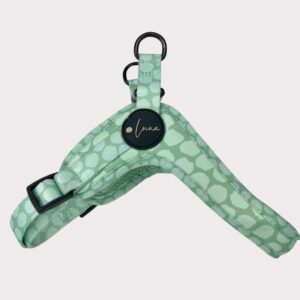
Step-in Dog Harness | Green Polka Dot Design
£15.50 – £20.00Price range: £15.50 through £20.00 -
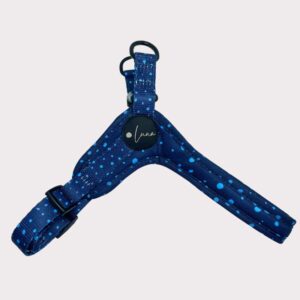
Step-in Dog Harness | Blue Polka Dot Design
£13.00 – £20.00Price range: £13.00 through £20.00 -
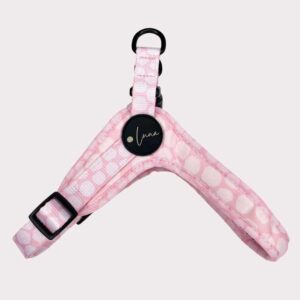
Step-in Dog Harness | Pink Polka Dot Design
£15.50 – £20.00Price range: £15.50 through £20.00 -
-
-
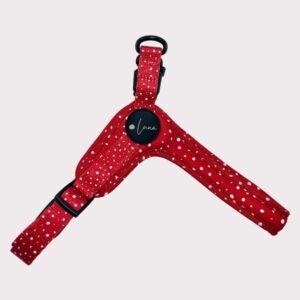
Step-in Dog Harness | Red Polka Dot Design
£13.00 – £20.00Price range: £13.00 through £20.00 -
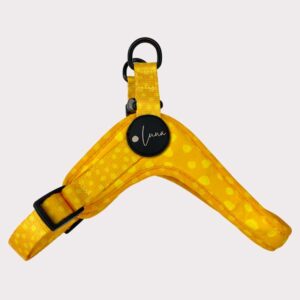
Step-in Dog Harness | Yellow Polka Dot Design
£15.50 – £20.00Price range: £15.50 through £20.00
Share This Post
LinkedIn
Threads
Pinterest
Twitter
Facebook