How to Measure Your Dog for a Harness | Breed Fit Guide
Getting the fit right makes walkies safer, calmer, and far more comfortable. A well fitted harness spreads pressure across the body, supports natural movement, and keeps wriggly pups secure.
This guide shows you exactly how to measure your dog for a harness, with simple steps, photos-in-your-head explanations, and specific notes for popular breeds and body shapes.
When you are ready to browse, explore our Dog Harnesses, including Step-In Harnesses and Adjustable Harnesses. If you would like a broader sizing overview for different items, our Size Guide is a handy reference.
What to measure
Most harness size charts are based on chest girth and sometimes neck circumference. A few styles also consider back length, but girth is the number that does the heavy lifting.
- Chest girth. The widest part of the ribcage, just behind the front legs.
- Neck. The base of the neck where a collar naturally sits, not the narrow part higher up.
- Weight. Useful as a cross check, especially between sizes.
The kit you need
You do not need much. A soft tape measure, a notebook or phone to save numbers, and a handful of high value treats will do nicely.
- Soft tape measure. Fabric or flexible plastic is best. A piece of string and a ruler works in a pinch.
- Treats. Reward calm standing. The experience should feel like a spa appointment, not a fitting room panic.
- Helper. Optional, very useful for wriggly puppies and excitable adolescents.
Step by step measuring
1. Set the scene
Choose a calm space on a non-slip surface. Let your dog sniff the tape and earn a few treats for simply standing near it.
2. Measure the chest girth
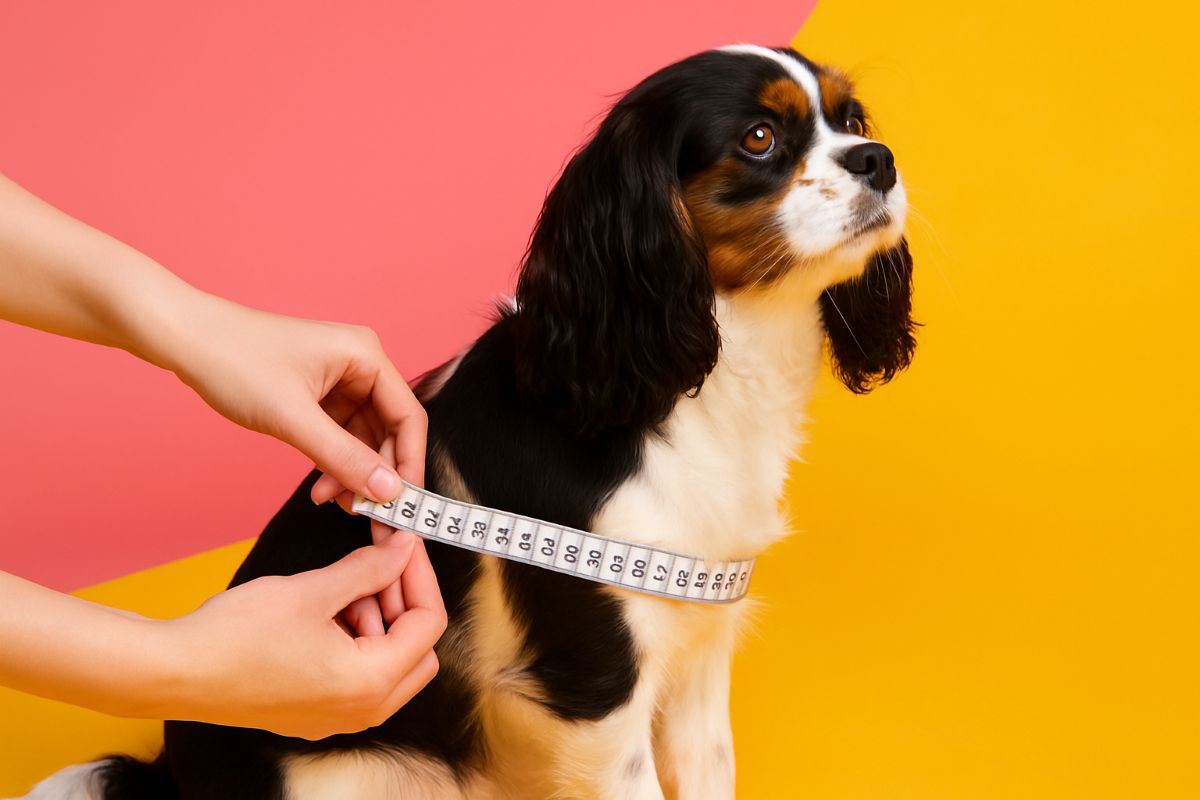
Start at the back. Wrap the tape around the widest point of the ribcage, just behind the front legs. Keep the tape level and snug, not tight. You should be able to slip one finger under the tape without denting the fur. Record the number in centimetres. Measure twice to be sure.
3. Measure the neck
Place the tape where a collar would sit at the base of the neck. This is lower than you think for many breeds. Keep it level and comfortable. Note the number.
4. Note the weight
Weigh your dog on bathroom scales by weighing yourself first, then together, then subtract. Round to the nearest half kilo. This is only a sense check, not the main decider.
5. Compare with size charts
Use chest girth as your primary guide. If your dog is between sizes, go up a size for a more relaxed fit, then fine tune the straps. If neck and chest land in different sizes, prioritise the fit that does not pinch the armpits and shoulders.
How to check the fit
Once the harness is on, do a quick comfort and safety check. This takes thirty seconds and saves a world of fidgeting on the pavement.-
- Two finger test. You should slide two fingers under any strap without force. Any tighter risks rubbing. Any looser invites wriggling.
- Shoulder freedom. Watch your dog take a few strides. The shoulders and elbows should move freely. No lifting of the fabric into the armpits.
- Sternum placement. Front chest panels should sit flat against the breastbone, not riding up to the throat.
- Escape check. Try to gently pull the harness backwards over the shoulders. If it slides over the elbows when loose, it is too big for the pup.
- Lead attachment. Clip the lead and walk a short loop. Nothing should twist or tilt on turns.
Breed and body shape notes
Every dog is an individual, but body shape patterns help you select and adjust with confidence.
Flat-faced and broad-chested dogs
French Bulldogs, Pugs, and Boston Terriers often have generous chests and shorter necks. Measure the girth twice and consider a style that leaves the armpits clear. Do not size down to “hold them in”. A slightly larger size with good strap adjustment is usually kinder.
Deep-chested and narrow-waisted dogs
Greyhounds, Whippets, and Lurchers have keel like breastbones with narrow waists. Take extra care with the sternum placement and watch for gaping behind the elbows. Adjustable chest and belly straps help you fine tune without pressure points.
Stocky, muscular dogs
Staffordshire Bull Terriers and similar builds benefit from generous chest room and soft strap edges. Check that the belly strap sits a few fingers behind the elbows to prevent rubbing.
Long backed, short legged dogs
Dachshunds and Basset Hounds need careful strap placement so nothing presses into the armpits. Keep the chest panel low and ensure the belly strap does not creep forward when they trot.
Tiny toy breeds
Chihuahuas and small Yorkies often sit between sizes. Prioritise a harness with featherlight hardware and plenty of adjustability. Check that buckles do not sit on the sternum.
Big fluffy coats
Pomeranians, Huskies, and double coated breeds can look snug in the salon and loose after a seasonal shed. Recheck girth monthly and after grooming so the harness stays kind to the coat and skin.
Measuring puppies
Puppies grow in bursts. Buy for the current size with room to adjust, not for months ahead. A heavy or oversized harness can change the way a puppy moves, which is not helpful while they are learning about the world.
- Measure every few weeks and adjust as needed.
- Choose soft fabrics and smooth edges while they are still teething and mouthing.
- Keep fittings short and upbeat. Treats and praise make it a positive routine.
Common mistakes to avoid
- Measuring too high on the neck. Stay at the base of the neck where a collar would sit.
- Pulling the tape too tight. A number that looks neat leads to straps that rub.
- Forgetting the armpits. Always check for clearance behind the elbows during a short walk.
- Ignoring coat changes. Fur thickness changes over the year. Recheck the fit with the seasons.
- Not testing movement. Have your dog sit, stand, and take a few turns before committing to a size.
Choosing a harness style for your measurements
Now you have the numbers, match them to the right style for your dog’s needs. Here is how the two most popular styles differ in relation to fit.
Step-in harness
Ideal for dogs who dislike things going over their head. Your dog steps in, you guide it up, and clip at the top. Fit is primarily determined by chest girth, with strap adjustments to keep the armpits clear.
Browse our Step-In Harnesses for easy fittings and neat everyday style.
Adjustable harness
Great for in-between sizes or changing coats. Multiple points of adjustment help you tailor the fit around neck and chest. Useful for deep-chested breeds or those that are still growing.
See our Adjustable Harnesses to fine tune comfort for active days.
Lead and collar pairing
Once the harness is sorted, choose a lead length that suits your setting and a collar that carries your ID tag comfortably. A short lead keeps things tidy on the pavement. A longer lead is lovely for the park where space allows.
Explore Dog Leads and Dog Collars to complete your walking setup.
Care, comfort, and rechecks
Good fit today does not guarantee good fit forever. Bodies change with seasons, exercise, and age. Make rechecking part of your routine.
- Give the harness a quick look after muddy adventures. Clean and dry per the care label.
- Run the two finger test monthly and after grooming.
- Keep an eye on the coat. Any flattening, rubbing, or redness is a cue to adjust.
Further reading and useful links
FAQs
Where should I measure for the chest girth?
Measure the widest point of the ribcage just behind the front legs. Keep the tape level and snug, without compressing the fur.
My dog sits between sizes. Which should I choose?
Go for the larger size and tighten the straps for comfort. It is kinder on the skin and gives you room for seasonal coat changes.
How tight should a harness be?
Two fingers should slide under any strap. If you cannot do that comfortably, it is too tight. If you can fit three or more, it is likely too loose.
Do I need a neck measurement for every harness?
Not always. Step-in styles rely more on chest girth. Adjustable styles often use both neck and chest to guide sizing.
How often should I remeasure?
Monthly for puppies, and after grooming or seasonal coat changes for adults. Otherwise, check every few months or whenever the fit looks different.
Can my dog wear a harness with a coat or jumper?
Yes, but recheck the fit. Layers add bulk and can push straps into the armpits. Adjust before you head out.
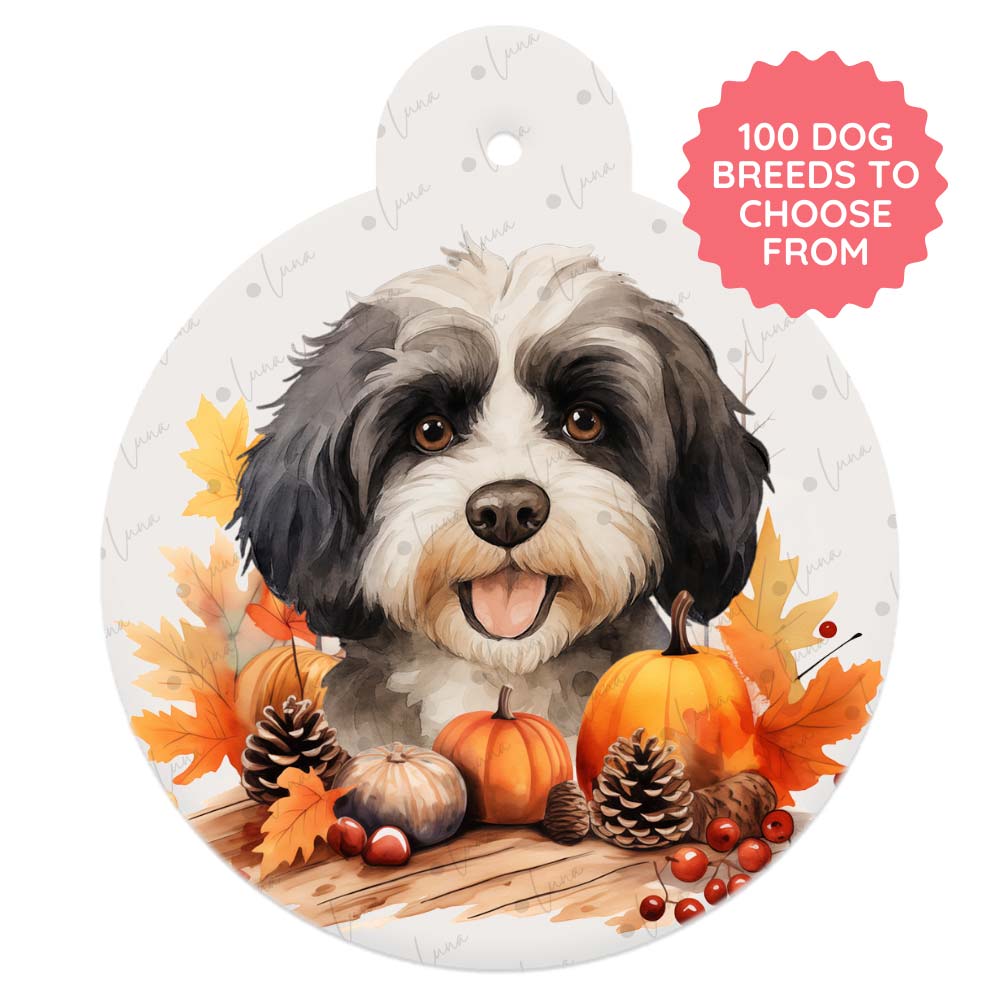
Our Autumn Dog ID Tag – Watercolour Pumpkin Scene is a chic way to keep your details close at paw. Choose from 100+ breeds & coat colours to match your pup, then add your surname, house number and postcode (and a contact number) on the reverse for UK ID tag compliance. Printed double-sided on lightweight aluminium (31 × 37 mm) with a stainless 360° swivel clasp and split ring, it is waterproof, fade-resistant and made to order in the UK. Pairs perfectly with our Pumpkin Spice Collection.
The Luna Collection
Dog Acessories
Share This Post
LinkedIn
Threads
Pinterest
Twitter
Facebook